- 30 April 2026
- Category: Revenue Assurance
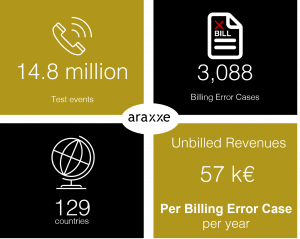
Araxxe’s Worldwide Billing Errors Observatory analyzed 14.8 million test events generated by Araxxe between January 1st, 2023, and December 31st, 2025, in over 129 countries. During this period, we identified 3,088 significant errors with an average financial impact of 57 k€ per year.
Understanding common issues impacting a wide range of operators helps Billing and RA professionals focus their attention on areas that present the highest levels of risk.
Follow our episodes week after week and you’ll get a high-level overview of the issues Araxxe testing identified. You can explore issues in more detail by requesting our observatory (email us at marketing@araxxe.com).
If you want further explanation, check out the article of Paul Flanagan and this this video interview on our YouTube channel where two of our experts discuss interesting findings from the 2026 observatory.
____________________________________
- Episode #1 - Missing Transactions
- Episode #2 - The 5 Faces of Data Billing Errors
- Episode #3 - Business Impact of Billing errors
- Episode #4 - More Insights & Statistics?
____________________________________
Episode #1 - Missing Transactions
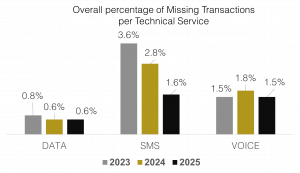
Missing transactions lead to considerable revenue loss for operators. Traditional reconciliation systems may fail to detect these issues depending upon where the transaction is lost or if it is incorrectly recorded.
The impact of missing transactions can vary depending on the specific context and the operator’s business model, but generally missing transactions lead to revenue loss and generate unexpected costs in several ways including:
- Pay as you go: Failure to bill "pay as you go" transactions – particularly international calls or message to high-cost destinations.
- Roaming: Failure to bill roaming transactions – which can result in costs from roaming partners without corresponding retail revenues.
- Bundle Limits: Incorrect application of bundle limits and failure to apply correct rules to subsequent usage.
- Fair Usage: Failure to apply “fair usage” policies leading to abuse and potential inflated costs.
Get the Full PDF Report: contact us